
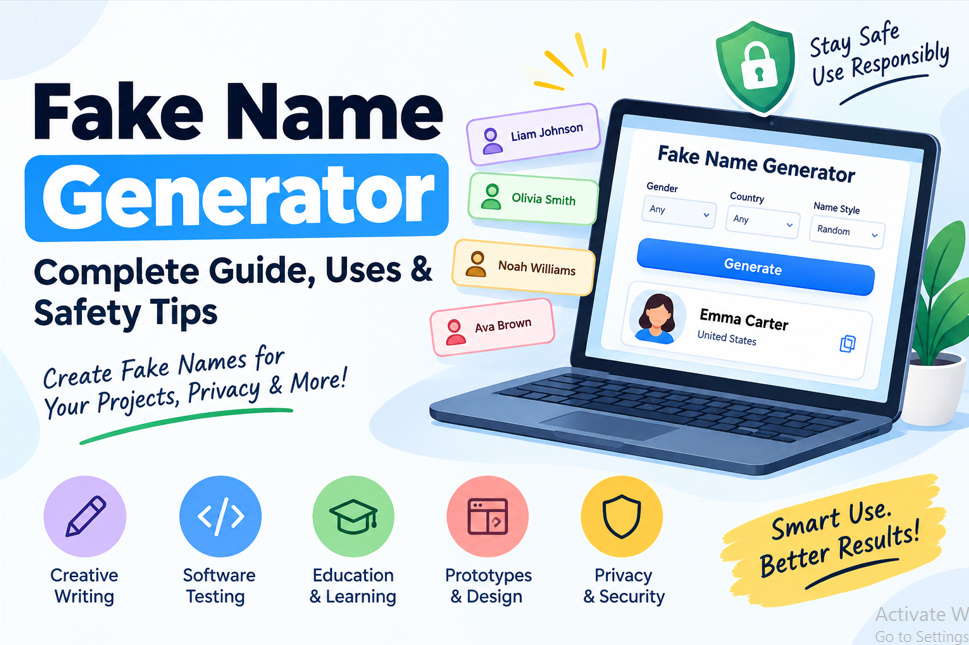
A fake name generator is a convenient online tool that creates fictional names within seconds. Instead of spending time searching through name lists or manually combining first names and surnames, users can generate realistic-looking combinations based on different preferences.
The benefits of a fake name generator extend beyond simple name creation. Writers, developers, students, designers, marketers, and everyday users can use fictional names for creative projects, software testing, demonstrations, sample data, and privacy-conscious situations where real personal information is unnecessary.
Saves Time and Makes Name Creation Easy
One of the biggest benefits of a fake name generator is speed. Choosing an appropriate name manually can take considerable time, especially when you need multiple options. A random name generator can produce several possibilities almost instantly, making the process faster and more convenient.
The simple interface of most name generators also makes them suitable for beginners. Instead of researching hundreds of names individually, users can select preferences and generate results with a few clicks. This streamlined approach is particularly useful when you need names for several characters, profiles, examples, or test records.
- Saves valuable time
- Produces instant results
- Reduces manual research
- Simplifies name selection
- Generates multiple options
- Supports quick brainstorming
- Helps beginners
- Improves productivity
Supports Creative Writing and Character Development
Writers often struggle to find names that feel natural and suitable for their characters. A fictional name generator provides immediate inspiration by producing different first-name and surname combinations. This can help authors move past creative blocks and concentrate on personality, plot, dialogue, and character development.
Generated names can also help establish a character’s background. Depending on the available options, writers can explore regional, cultural, linguistic, or stylistic naming patterns. The final name can then be adjusted manually to better fit the fictional world, historical setting, personality, or storyline.
- Creates character names
- Supports storytelling
- Helps overcome writer’s block
- Inspires new ideas
- Builds fictional personas
- Supports world-building
- Helps name supporting characters
- Encourages creativity
Helps Protect Unnecessary Personal Information
Another potential benefit is the ability to use fictional placeholder information when real personal details are unnecessary. For example, a designer creating a website prototype may need a sample customer name. Using synthetic information avoids unnecessarily placing someone’s actual name into a demonstration.
However, a fake name should not be viewed as a guarantee of anonymity. Online privacy involves many other factors, including account information, cookies, device details, and network information. The safest approach is to use fictional information only where appropriate and follow the requirements of each website or service.
- Creates placeholder names
- Reduces unnecessary data exposure
- Supports privacy-conscious workflows
- Avoids using real names in prototypes
- Helps create sample profiles
- Separates testing from real users
- Encourages data minimization
- Supports responsible information handling
Useful for Software Testing and Development
Developers need realistic sample information when building websites, mobile applications, databases, and online platforms. A fake name generator can supply synthetic names for registration forms, customer profiles, dashboards, search systems, tables, and other interface components.
Using fictional test data can also make quality assurance more practical. Developers can test different name lengths, combinations, and formatting requirements without unnecessarily relying on personal information from real users. This helps identify display problems, validation issues, sorting errors, and other technical problems during development.
- Creates test records
- Populates databases
- Tests registration forms
- Checks profile layouts
- Tests search functions
- Supports QA workflows
- Checks name formatting
- Helps developers build prototypes
Provides Diverse Name Ideas and Options
A good random name generator can expose users to a broad selection of naming possibilities. Instead of repeatedly choosing familiar names, users can explore different combinations, cultures, regions, and naming patterns. This variety is especially helpful for creative professionals who need several unique ideas.
Diverse options can also improve fictional character development. A character’s name can influence how readers perceive their background, age, personality, or role. By generating multiple possibilities and comparing them, users can find a name that feels appropriate instead of settling for the first idea.
- Offers name variety
- Encourages exploration
- Provides alternative choices
- Supports different regions
- Helps avoid repetition
- Inspires character concepts
- Expands naming possibilities
- Makes brainstorming easier
Useful for Prototypes, Mockups, and Demonstrations
Designers frequently need realistic-looking content when creating website mockups, application interfaces, presentations, or product demonstrations. Empty layouts can make a prototype feel unfinished, while fictional names can demonstrate how real content might appear without requiring actual customer information.
Fake names are particularly useful when testing visual design. A short name and a long name can behave differently inside buttons, profile cards, navigation menus, tables, and mobile layouts. Including varied synthetic names helps designers identify spacing, wrapping, alignment, and responsive design issues.
- Improves prototype realism
- Fills empty layouts
- Supports UI design
- Helps test responsive layouts
- Creates sample profiles
- Supports presentations
- Improves demonstrations
- Tests different text lengths
Helps Students, Teachers, and Content Creators
Students can use fictional names when preparing assignments, presentations, examples, mock scenarios, and educational projects. Teachers can also use synthetic names when demonstrating concepts involving databases, surveys, forms, classroom exercises, or hypothetical situations.
Content creators may use generated names when developing fictional examples, tutorials, sample conversations, stories, or educational material. Using fictional identities keeps examples separate from real individuals and makes it easier to create reusable demonstrations without exposing unnecessary personal information.
- Supports student projects
- Creates classroom examples
- Helps teachers demonstrate concepts
- Builds sample scenarios
- Supports tutorials
- Creates fictional examples
- Helps content creators
- Simplifies educational demonstrations
Encourages Responsible Use of Synthetic Data
Perhaps one of the most practical benefits of a fake name generator is that it encourages users to distinguish between real personal information and synthetic data. When developing software or creating examples, fictional names can provide realistic content without requiring real people’s names.
Responsible usage is essential, however. Generated names should not be used for impersonation, fraud, deception, bypassing identity verification, or other harmful activities. The benefit comes from using fictional information for legitimate purposes such as testing, education, creativity, design, and demonstrations.
- Uses synthetic information
- Supports safer testing
- Separates real and fictional data
- Encourages responsible workflows
- Protects real identities
- Helps reduce unnecessary data use
- Supports ethical development
- Promotes better privacy practices
Frequently Asked Questions About Fake Name Generator Benefits
What is the main benefit of a fake name generator?
The main benefit is convenience. It can quickly create fictional names without requiring users to manually research and combine first names and surnames.
How can writers benefit from a fake name generator?
Writers can use it for character development, storytelling, fictional families, role-playing scenarios, and brainstorming when they need fresh naming ideas.
Can developers use fake names for testing?
Yes. Synthetic names can help developers test forms, databases, profiles, search functions, interfaces, and other application features without unnecessarily using real people’s information.
Does a fake name generator protect privacy?
It can help reduce the need to place real names into examples or prototypes, but generating a fictional name does not guarantee complete online anonymity.
Can students use fake name generators?
Yes. Students can use generated names for fictional assignments, presentations, sample scenarios, educational exercises, and creative projects.
Are fake names useful for website design?
Yes. Designers can use fictional names to populate mockups and test how different name lengths appear across cards, tables, forms, profiles, and responsive layouts.
Can a generated name be completely unique?
Not necessarily. A generated combination can coincidentally match a real person’s name, so users should not assume that every result is globally unique.
Are there risks associated with fake name generators?
The primary concern is misuse. Generated information should not be used for impersonation, fraud, deceptive activity, or bypassing systems that require accurate identity information.
The benefits of a fake name generator make it a useful resource for many legitimate situations. It saves time, supports creativity, provides fictional placeholder data, assists software testing, improves prototypes, and offers quick naming inspiration.
For the best results, use generated names according to your specific purpose. Treat them as fictional or synthetic information, review the result before using it, and always respect privacy, platform requirements, and applicable rules. Used responsibly, a fake name generator can make creative and technical workflows faster, simpler, and more efficient.